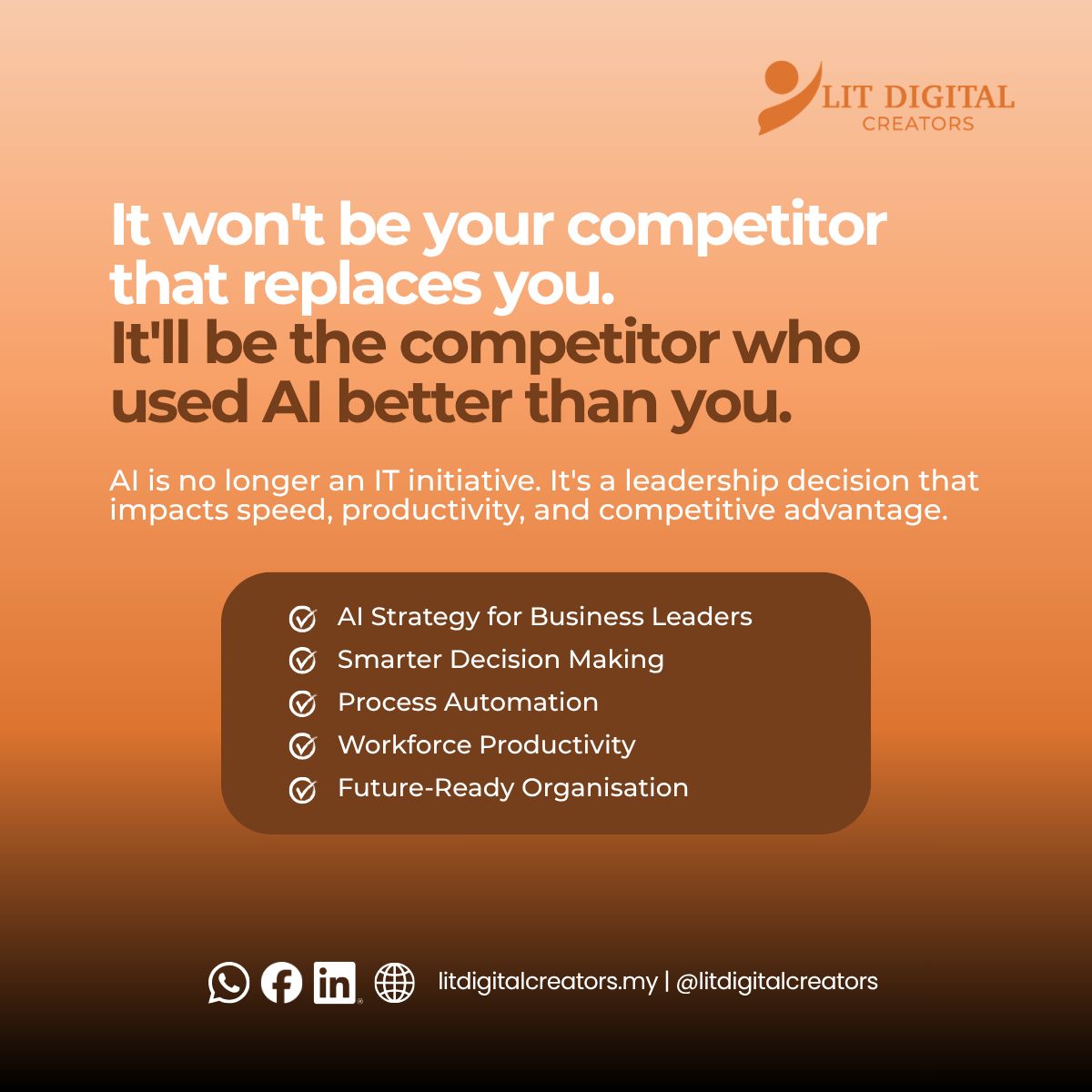
Why Every Business Leader Needs an AI Adoption Strategy in 2026
In 2026, artificial intelligence is no longer a technology decision. It is a business leadership decision. The question is no longer whether AI will affect your industry, but whether your organisation is prepared to lead or follow.
Across Southeast Asia, organisations are moving beyond experimental AI pilots and into structured adoption. Companies that treat AI as a standalone IT initiative are already falling behind those that embed it into their business strategy, governance, and operating model.
This article provides a framework for business leaders who want to build a practical, outcome-driven AI adoption strategy. It is written for CEOs, managing directors, and senior executives who need to make informed decisions about AI investment, capability building, and organisational change.
AI Is No Longer an IT Project
There is a common misconception that AI adoption belongs to the IT department. In practice, AI impacts every business function. HR teams use AI for workforce planning and skills gap analysis. Finance departments deploy AI for fraud detection and forecasting. Sales and marketing teams rely on AI for lead scoring, content personalisation, and campaign optimisation. Operations teams use AI for supply chain forecasting and process automation. Customer service functions use AI-powered chatbots and sentiment analysis to improve response times and satisfaction rates.
When AI is treated as an IT project, it is often disconnected from business objectives. Without leadership ownership, these initiatives lack budget authority, cross-functional collaboration, and accountability for outcomes. The result is fragmented adoption that never scales.
For AI to deliver measurable value, it must be treated as a strategic business function led by the C-suite, not delegated to a technology team.
Why Many AI Initiatives Fail
Despite growing investment in AI, many organisations struggle to move from pilot to production. Research consistently points to the same root causes, and they are rarely about technology.
Lack of leadership alignment. AI initiatives often stall when there is no shared vision among senior stakeholders. Without executive sponsorship, AI projects compete for resources with other business priorities and lose momentum.
Unclear objectives. Many organisations adopt AI without defining what success looks like. They invest in tools and platforms before identifying the business problems they need to solve. This leads to technology looking for a problem, rather than the reverse.
No governance framework. AI introduces new risks around data privacy, bias, compliance, and ethical use. Organisations that deploy AI without clear governance expose themselves to regulatory and reputational risk.
Focusing on tools instead of outcomes. The AI vendor landscape is crowded and noisy. Organisations that prioritise purchasing AI software over building internal capability, process change, and change management rarely see the expected return on investment.
Insufficient workforce capability. AI adoption requires new skills across the organisation. Leaders often underestimate the investment needed in upskilling, reskilling, and cultural change. Without addressing the human side of AI adoption, even the best technology strategy will underperform.
The Three Pillars of Successful AI Adoption
Based on industry best practices and implementation experience, effective AI adoption rests on three foundational pillars.
1. Leadership Alignment
AI adoption must be driven from the top. This means the CEO and senior leadership team define a clear AI vision, allocate dedicated budget, and establish accountability for outcomes. Leadership alignment ensures that AI initiatives are connected to strategic business priorities rather than operating in isolation.
2. AI Readiness Assessment
Before investing in AI solutions, organisations should assess their current readiness across four dimensions: data infrastructure, workforce capability, process maturity, and technology stack. An AI readiness assessment identifies gaps, prioritises investments, and reduces the risk of costly implementation failures.
3. Prioritising High-Impact Use Cases
Not every business function needs AI at the same time. Successful organisations identify two to three high-impact use cases that align with their strategic objectives, have clear ROI, and are feasible with their current data and capability levels. Starting small, proving value, and scaling from proven use cases is more effective than attempting enterprise-wide transformation in a single phase.
AI Opportunities Across Business Functions
The following table outlines practical AI applications across key business functions. These use cases are implementable today and represent areas where most organisations can expect measurable impact within six to twelve months.
| Function | AI Use Case | Expected Outcome |
|---|---|---|
| HR | Skills gap analysis, AI-powered recruitment screening, personalised learning pathways | Reduced time-to-hire, improved workforce planning accuracy |
| Finance | Fraud detection, automated reconciliation, predictive cash flow forecasting | Lower financial risk, faster month-end close, improved forecasting accuracy |
| Sales | Lead scoring, sales forecasting, conversational AI for prospect engagement | Higher conversion rates, shorter sales cycles, increased revenue per rep |
| Marketing | Content personalisation, audience segmentation, predictive campaign analytics | Improved campaign ROI, higher customer engagement, reduced customer acquisition cost |
| Operations | Supply chain optimisation, predictive maintenance, intelligent process automation | Reduced operational costs, minimised downtime, faster process execution |
| Customer Service | AI-powered chatbots, sentiment analysis, automated ticket routing and resolution | Faster response times, higher customer satisfaction, reduced support costs |
What Business Leaders Should Do Next
Building an AI adoption strategy does not require a complete organisational overhaul. The following actions are practical steps that executive leaders can take starting today.
Educate yourself and your leadership team. Before making AI investment decisions, invest time in understanding what AI can and cannot do. Executive-level AI literacy is a prerequisite for informed decision-making.
Conduct an AI readiness assessment. Evaluate your organisation current data quality, technology infrastructure, workforce capabilities, and process maturity. This assessment will surface the most critical gaps and inform your investment priorities.
Identify two to three high-impact use cases. Select AI applications that address genuine business pain points, have clear ROI, and are feasible with your existing resources. Focus on depth over breadth.
Build workforce capability early. AI adoption is as much about people as it is about technology. Invest in upskilling programs, change management, and leadership development to prepare your workforce for AI-augmented ways of working.
Establish an AI governance framework. Define clear policies for data use, model transparency, ethical guidelines, and compliance. Governance should be established before deployment, not after.
Conclusion
Artificial intelligence is reshaping how organisations operate, compete, and deliver value. For business leaders, the question is no longer whether to engage with AI, but how to do so strategically, responsibly, and effectively.
An AI adoption strategy provides the framework for making informed decisions about investment, capability building, and organisational change. It turns AI from a technology initiative into a business advantage.
The organisations that will thrive in the coming years are not necessarily those with the most advanced technology. They are the ones whose leaders take deliberate, structured action today.
Frequently Asked Questions
What is an AI adoption strategy, and why does my organisation need one?
An AI adoption strategy is a structured plan that aligns AI initiatives with business objectives, defines governance frameworks, identifies high-impact use cases, and builds workforce capability. It ensures that AI investments deliver measurable business outcomes rather than remaining isolated experiments.
How do I know if my organisation is ready for AI adoption?
Readiness is determined by assessing four areas: data quality and accessibility, technology infrastructure, workforce AI literacy and skills, and process maturity. An AI readiness assessment provides a baseline and helps prioritise investments in the areas that need the most attention.
What are the biggest risks of adopting AI without a strategy?
The most common risks include wasted investment in tools that do not solve real business problems, data privacy and compliance violations, workforce resistance due to lack of change management, and difficulty scaling beyond pilot projects. A strategy mitigates these risks by providing structure, governance, and accountability.
How long does it take to see results from AI adoption?
Timeframes vary depending on the complexity of use cases and the organisation readiness level. High-impact use cases such as AI-powered process automation or sales forecasting can show measurable results within three to six months. More complex transformations may take twelve to eighteen months to deliver full value.
Do I need to hire data scientists to start my AI journey?
Not necessarily. Many organisations begin their AI journey by building executive AI literacy, conducting readiness assessments, and deploying AI-powered tools that do not require in-house data science teams. As adoption matures, organisations can invest in specialised talent to support more advanced use cases.
About LIT Digital Creators
LIT Digital Creators is a corporate training and digital transformation company based in Malaysia. We help organisations build AI capability through structured training programs, executive education, and strategic advisory services. Our programs are HRDC claimable and designed for businesses at every stage of their AI adoption journey.
COMPLIMENTARY EXECUTIVE WEBINAR
AI for Leaders — 1 Hour Executive Webinar
Learn how leaders build AI strategies that deliver measurable business value and avoid common AI adoption mistakes. Join our complimentary executive webinar.
Join 1hour WebinarContinue the Conversation on LinkedIn
View LinkedIn DiscussionRelated Articles
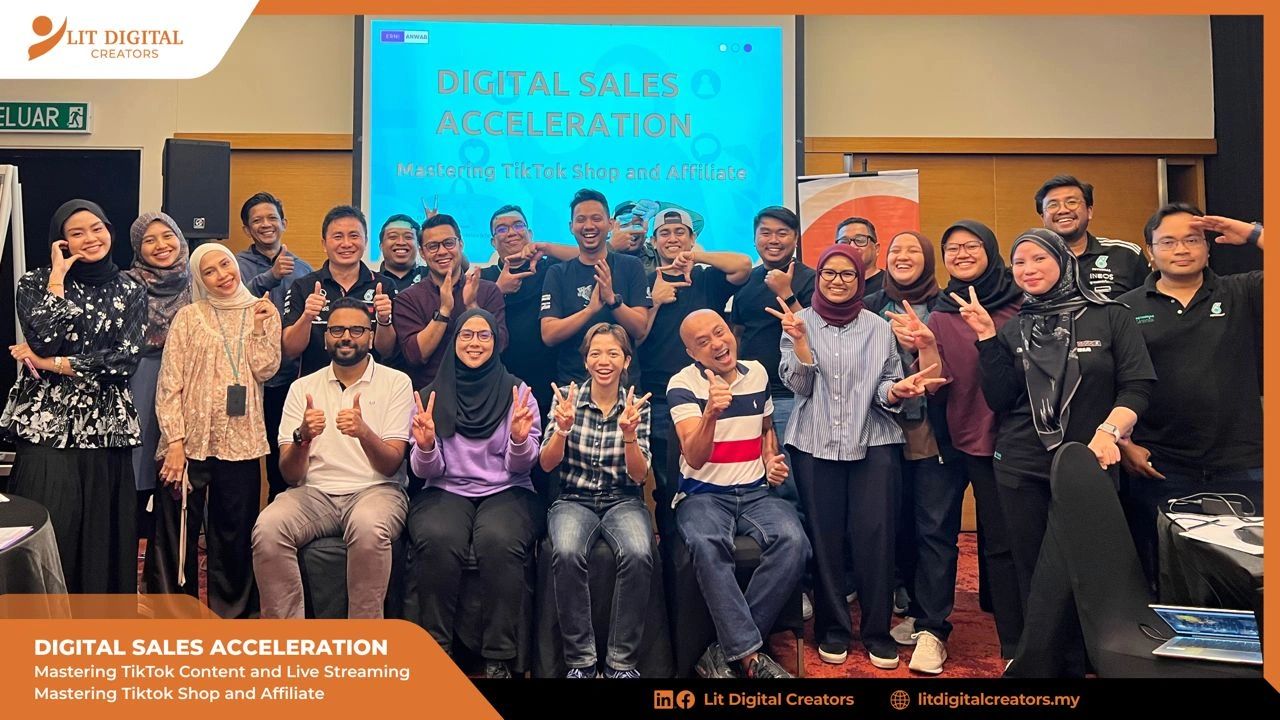
The Future of Work: Why Digital Skills Matter More Than Ever
Explore the key digital competencies your workforce needs to thrive in an era of rapid technological change.
Maximising Your HRDC Grant for Digital Upskilling
A practical guide to leveraging HRDC funds for comprehensive digital transformation training programs.
A Complete Guide to HRDC Claimable Training in Malaysia
Understand how HRDC claimable training works, how to maximise your levy, and why leading organisations invest in structured workforce upskilling.